Friday 23 December 2011
Presented in June 1993, the second Evolution version of the Delta HF Integrale featured an updated version of the 2-litre 16-valve turbo engine to produce more power, as well as a three-way catalyst and Lambda probe. The addition of the catalyst did not penalise performance. Indeed, the Evoluzione II produced more power and torque than its predecessor, the Evoluzione I. That's because Lancia added a series of technical improvements which may be summed up as follows:
A Marelli integrated engine control system with an 8 MHz clock frequency which incorporates:
-timed sequential multipoint injection;
-self-adapting injection times;
-automatic idling control;
-engine protection strategies depending on the temperature of intaken air;
-mapped ignition with two double outlet coils;
-three-way catalyst and pre-catalyst with lambda probe (oxygen sensor) on the turbine outlet link;
-anti-evaporation system with air line for canister flushing optimised for the turboengine;
-new Garrett turbocharger: water-cooled with boost-drive management i.e. boost ncontrolled by feedback from the central control unit on the basis of revs/throttle angle, mapping designed for ultra-progressive response to acceleration;
-knock control by engine block sensor and new signal handling software that acted simultaneously on spark advance, fuel quantity injected and turbocharging;
The basic engine structure remained unchanged:
-twin counter-rotating balancer shafts;
-light alloy cylinder heads;
-twin overhead camshafts driven by toothed belt;
-four valves per cylinder;
The engine developed a maximum power output of 215 PS (158 kW) DIN (against 210 PS on the earlier uncatalysed version) and maximum torque of 32 kgf·m (314 N·m) (formerly 31 kgf·m or 300 N·m).


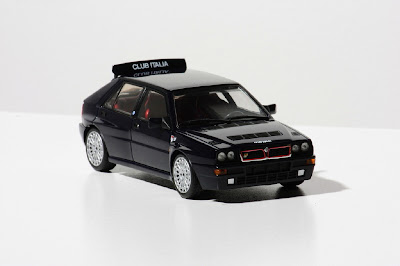


Engine: 4 cylinders
Capacity: 1995
Power: 196 HP
Gearbox: 5+1
Top Speed: 220 km/h


 Engine: 6L


 Engine: 4 cylinders